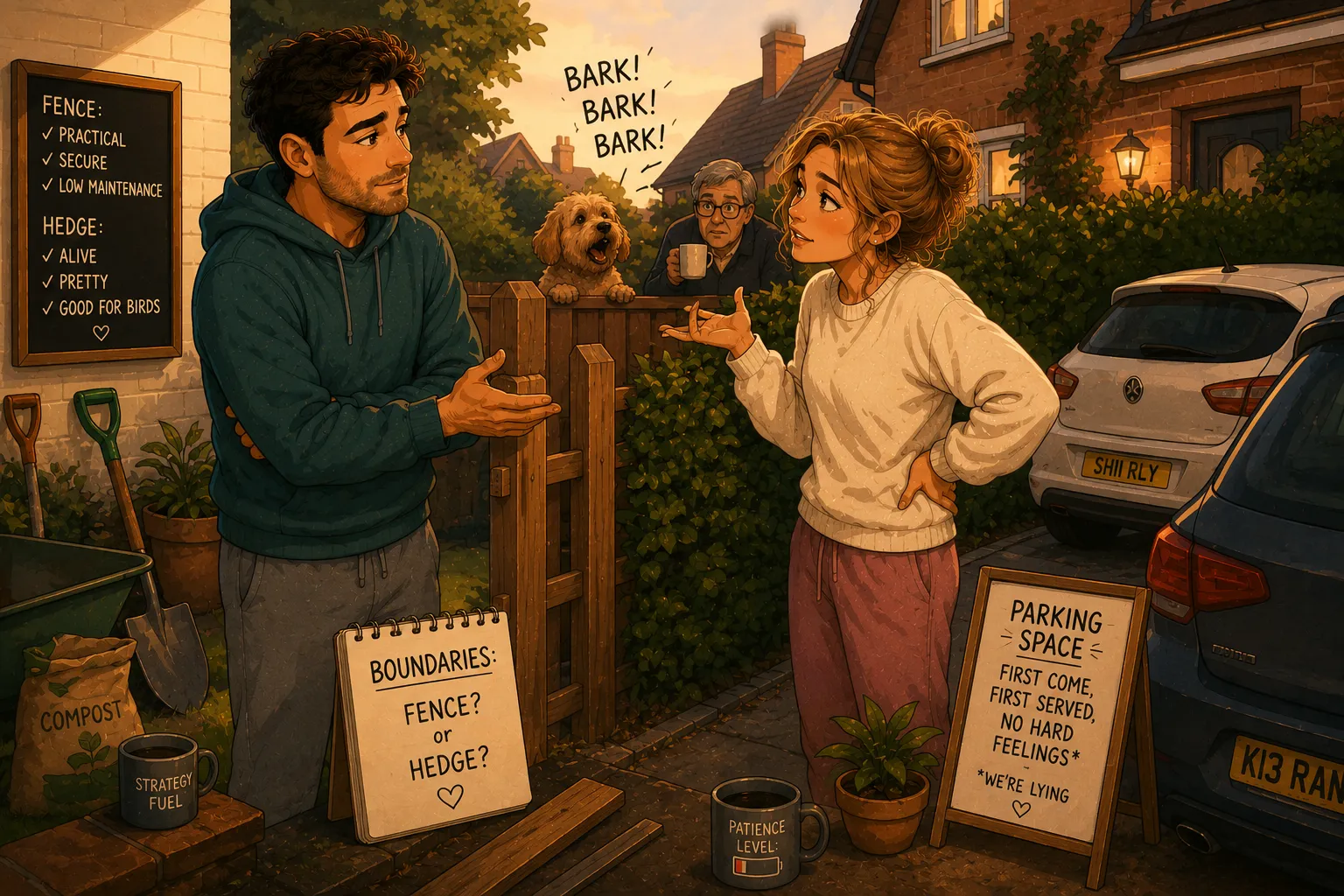
The garden boundary was the first real test. Not of their relationship, of their ability to have a disagreement without it becoming a declaration of war. Derek wanted a fence. Shirly wanted a hedge. He thought fences were practical. She thought hedges were alive. He said fences were low maintenance. She said hedges were prettier. He said prettiness wasn't a security feature. She said security wasn't the only feature.
It went on like this for three weeks. Three weeks of low-grade horticultural warfare, punctuated by visits to garden centres where they argued about compost in hushed tones while other couples blissfully compared patio stones. The neighbours must have thought they were mad.
The neighbour noise was what finally brought it to a head. Their neighbours, the ones on the other side of the fence-that-wasn't-a-hedge-yet, had a dog that barked at everything. Wind, birds, the postman, the concept of Tuesday. Derek wanted to complain. Shirly wanted to be understanding. He said understanding didn't stop the noise. She said complaining didn't either.
What they were really arguing about was this: Derek wanted to protect their space, and Shirly wanted to live in it without anxiety. He saw threats everywhere, the neighbours, the noise, the boundary that wasn't a boundary yet. She saw him building walls when he should have been building a life. They were both right. They were both wrong. And the garden, which should have been where they grew things, became where they drew lines.
The parking space was smaller but somehow louder. One space. Two cars. Derek got home first, he parked in the space. Shirly got home first, she parked in the space. There was no system, no agreement, just two people who each assumed the space was theirs because they'd got there first. It was childish. It was human. And it was the kind of thing that, if you don't laugh about it, will eat your relationship alive one passive-aggressive parking manoeuvre at a time.